

Working the Weather: January at WeeShire Mains
🌾 January Blog – 2026
Working the Weather: January at WeeShire Mains
January surprised us this year.
We had stretches of unusual warmth — the kind that makes you look at the forecast and say, “Move now.”
So we did.
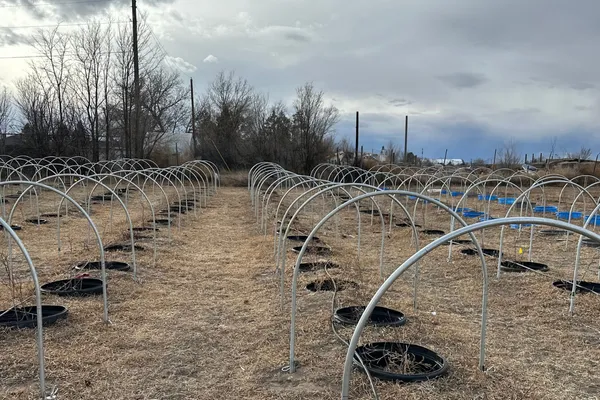
At WeeShire Mains, we took full advantage of those warmer days to push hard on installing low tunnels in the blueberry field. We’re not completely finished — but we’re this close.
Short winter days and a few scheduled events limited how much we could accomplish before dark, but steady progress was made. Our goal is to have the tunnels fully completed by the end of February, especially as we anticipate that our cold weather may show up later in the spring — which it often does.
We’ve already experienced a couple sharp cold snaps. From last year, we learned the plants can tolerate more cold than many people assume. What concerns us more than temperature is wind.
Wind strips moisture.
Wind stresses young plants.
Wind doesn’t negotiate.
The low tunnels aren’t just about warmth — they’re about protection from exposure and stabilizing growing conditions in a region that can shift quickly.
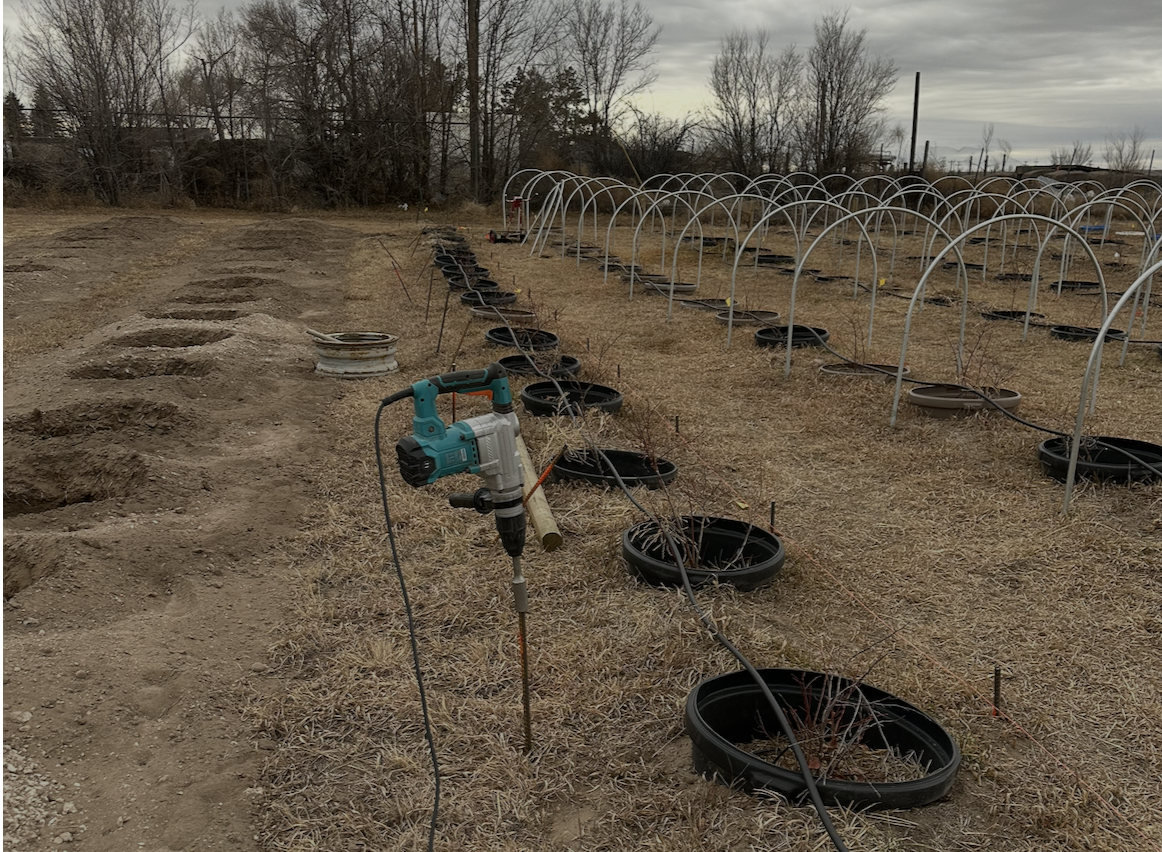
Installing rebar anchors for the low tunnels — building stability before the wind has its say.
It’s Not the Sand — It’s the Chemistry
Many assume sandy soil is the obstacle in western Nebraska. In reality, sand drains well, which can be an advantage.
The greater challenge is soil and water chemistry.
Our field runs higher in pH (more alkaline), and so does our irrigation water. Blueberries prefer acidic soil. Add in low organic matter in the selected field — plus consistent wind exposure — and success requires more than simply planting.
This winter’s work has included trenching, drilling holes for container-based growing systems, adding organic material, and improving long-term soil structure. And as often happens when working older ground, we’ve unearthed unexpected machine parts — reminders that land always carries a history beneath the surface.
Barn Improvements & The “Chicken Palace”
Inside the barn, improvements are also underway thanks to generous support from a private foundation.
The new “Chicken Palace” is fully functional, with only a few finishing details remaining before we officially close off the old coop and reinforce this as the flock’s permanent home. Transition takes consistency — even for chickens.
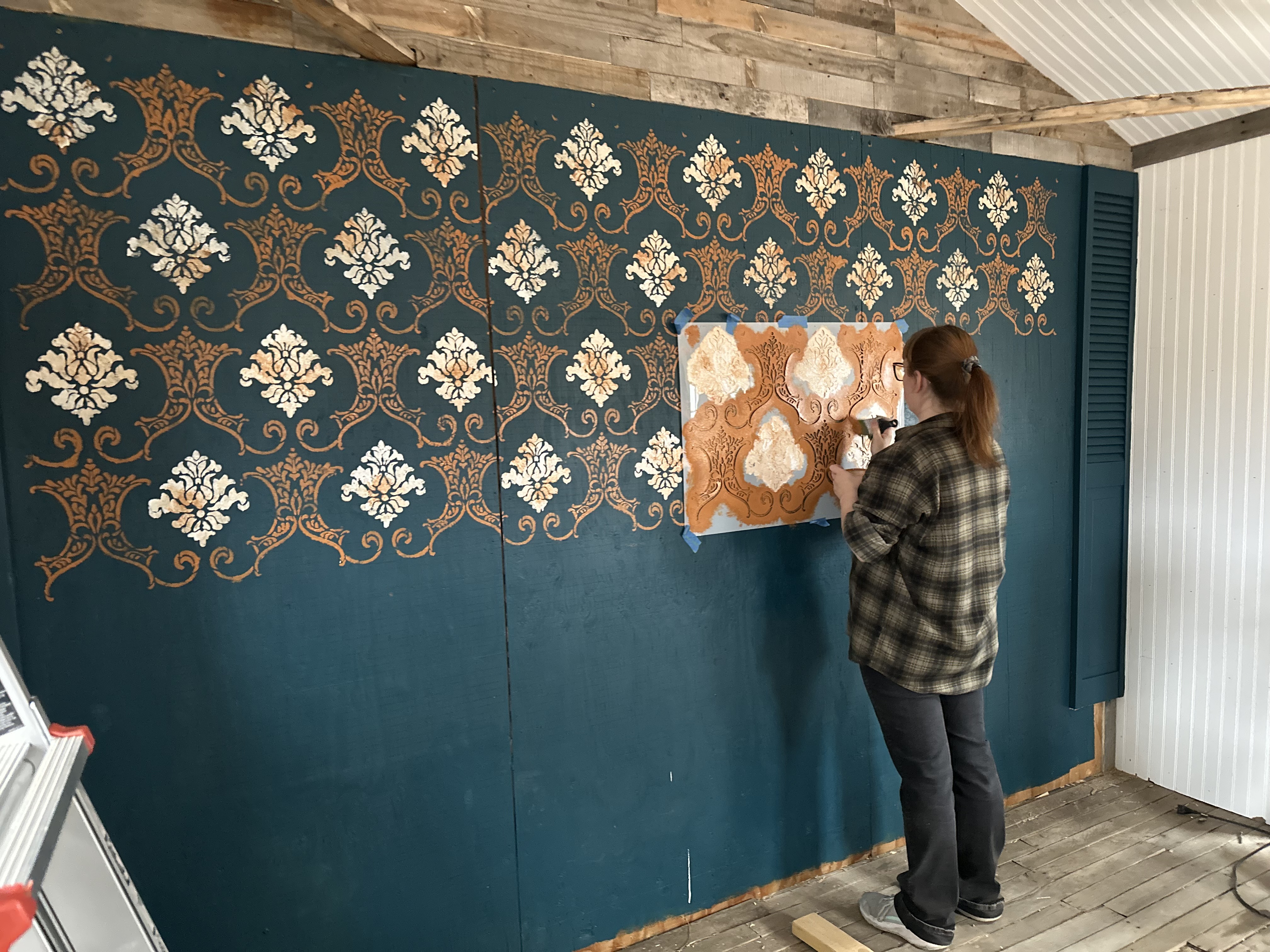
We named it the Chicken Palace — now the residents expect royal treatment.
Adding a little interior flair.
Next, we’ll expand the chicken run with plans to create something closer to a “chicken garden,” encouraging healthier movement and improving long-term management.
Building Soil That Works Harder
We also continued building up our hugelkultur beds — raised beds layered with buried wood and organic material to retain moisture and gradually enrich soil.
Last summer, we tested one bed with donated tomato plants. After watering during transplant, we stepped back. The results were encouraging. In a climate where wind and heat pull moisture quickly, hugelkultur may be one of the most practical tools for water conservation.
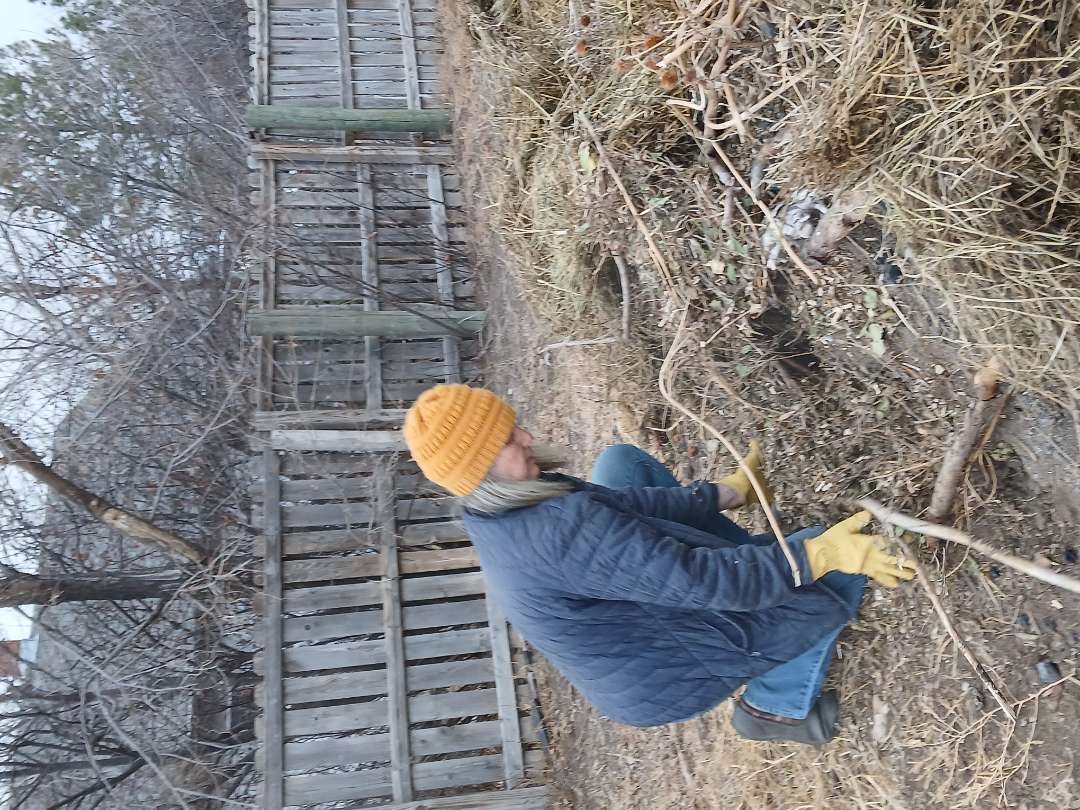
It doesn’t look impressive yet — just sticks and yard waste.
But this is the beginning of a water-smart growing system.
January wasn’t flashy — but it was productive.
We’re nearly finished with the low tunnels and hopeful they’ll be complete by the end of February. We’ll be posting a progress video on YouTube soon to show how the field is shaping up.
Out here, you work with the weather when it gives you a window — and you prepare for when it doesn’t.
And spring will be here before we know it.
Follow our progress:
🎥 YouTube: [@WeeShire-Mains]
📸 Facebook [@weeshiremains] / Instagram: [@weeshiremains]